List of Fun Latin Vocab Games for the Classroom
Here's our list of great Latin vocabulary games for the classroom! From Magnet Toss to Charades, these fun Latin classroom activities keep students engaged while reviewing Latin vocab and meanings. Perfect for test prep, review, or brain breaks. Also, try our random vocab activity picker!
List of Latin Vocab Games for the Classroom
Using games in the classroom makes learning Latin vocab fun, active, and memorable. These Latin classroom games help students review words, practice meanings, and stay engaged. Whether you are reviewing before a test or just want to energize your class while helping vocab stick, these review games are great tools.
Here are 18 Latin vocabulary games your students will love and how to play them!
Can't decide? Spin to Get a Random Activity!
Wheel of Latin Vocab Games!
Quick Navigation
1. Funniest Drawing Competition
Give each student a sheet of paper that has rows of squares large enough to draw images inside. (In a pinch you can also have students take blank sheets of paper and divide them themselves.) Ask your students to draw a funny, silly, or creative picture that shows the meaning of each vocab word labeled with the Latin. For competition, award prizes for funniest, best drawn, most creative, and so on. After everyone is done, display the drawings and read the words aloud.
You can do this in class right away if your school has those document cameras that plug right into your computer. If you do not have access to a document camera, take the drawings home, take photos of the best ones, and throw them onto a PowerPoint or Google Slides presentation. In class the next day, you can have students vote on the funniest or most memorable ones. I have found that drawing, labelling, and seeing these silly pictures help students really lock those words into memory.
Here are some of my favorites that my students have drawn over the years...
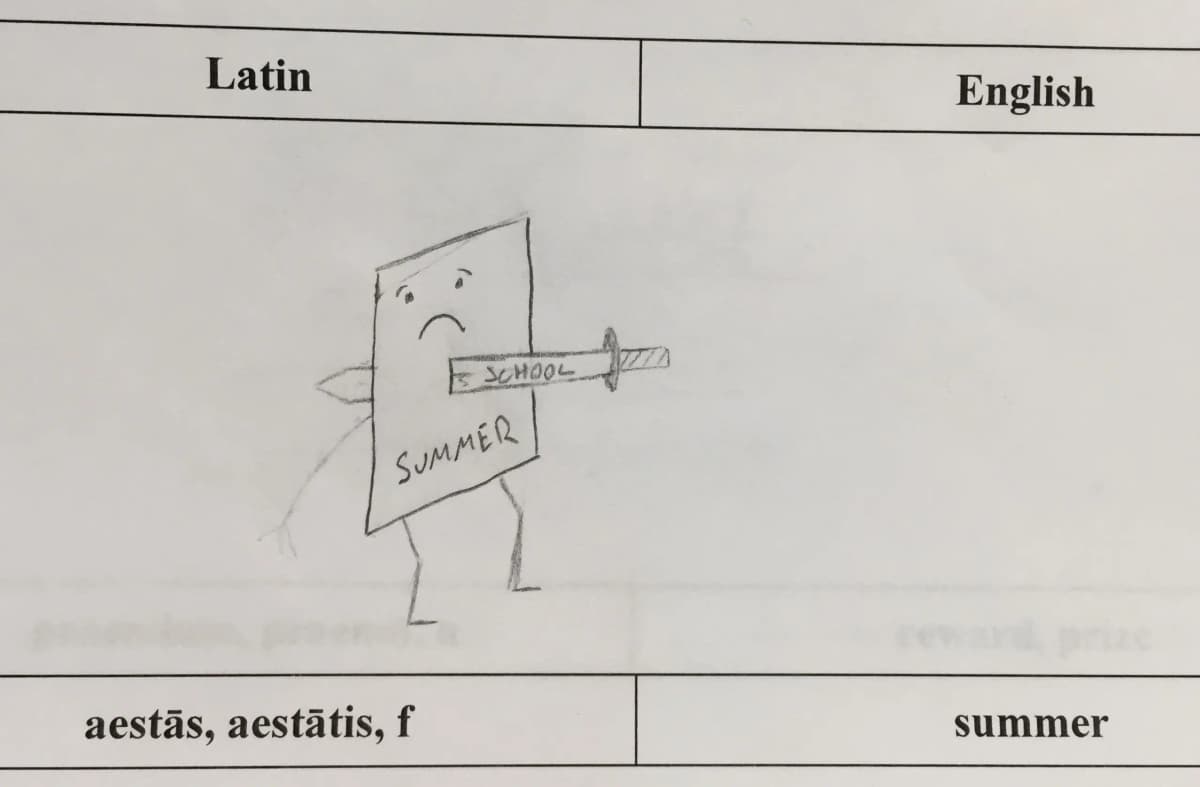
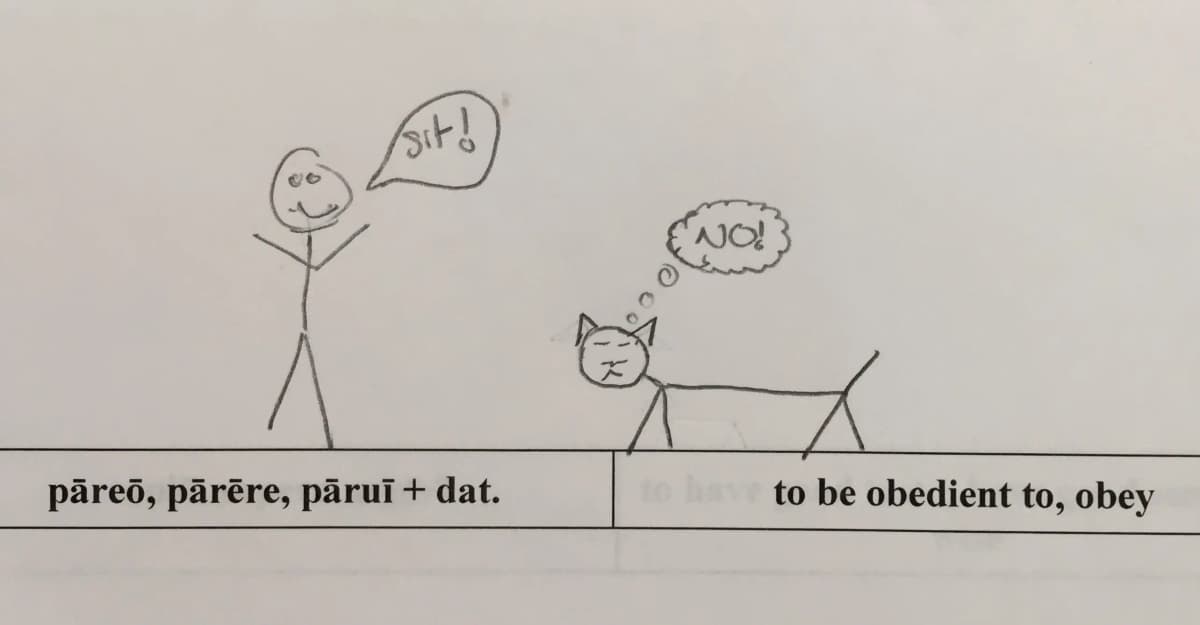
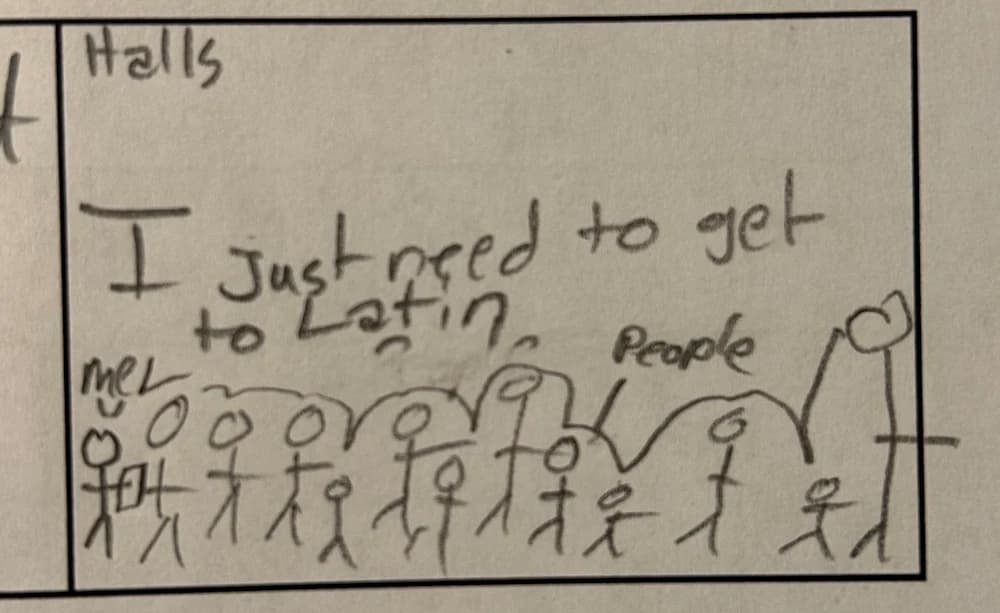
If your students are anything like mine, they love to draw! Make the most of it!
2. Around the World
I have also heard this one called "Around the Empire". One student stands beside the neighboring student's desk. You say a Latin word, and both students try to say the correct English meaning first. The winner moves on to challenge the next student. The goal is to go "around the world" (around the classroom) by beating every classmate. This has always been one of my students' favorites. Kids love the chance to move around the classroom and the fact that the progress is measured by seats moved makes it easy to keep score.
3. Magnet Toss
Write English meanings on the board (or Latin words), spaced out around the whiteboard. Two students stand behind a toss line with large magnetic decals like the ones that go on cars. You call out a Latin word (or English meaning) and they toss their magnets at the correct answer. The first magnet to land on (or closest to) the right spot wins the round. Rotate players so everyone gets a turn. It is fast, fun, and works great on most magnetized whiteboards, but just remind students to toss, not throw.
4. Pictionary
Write Latin vocab words on slips of paper. One student gets a word and must draw a picture showing the meaning of the word without writing any words or letters! Their team has 60 seconds to guess the correct Latin word. If they guess it, they get a point. Then another team goes. This game helps students connect Latin words with visuals, which makes them far easier to remember. It is also a great quiet activity for a rainy day: instead of two massive teams, friends can play in pairs quietly.
5. Taboo / Verbum Prohibitum
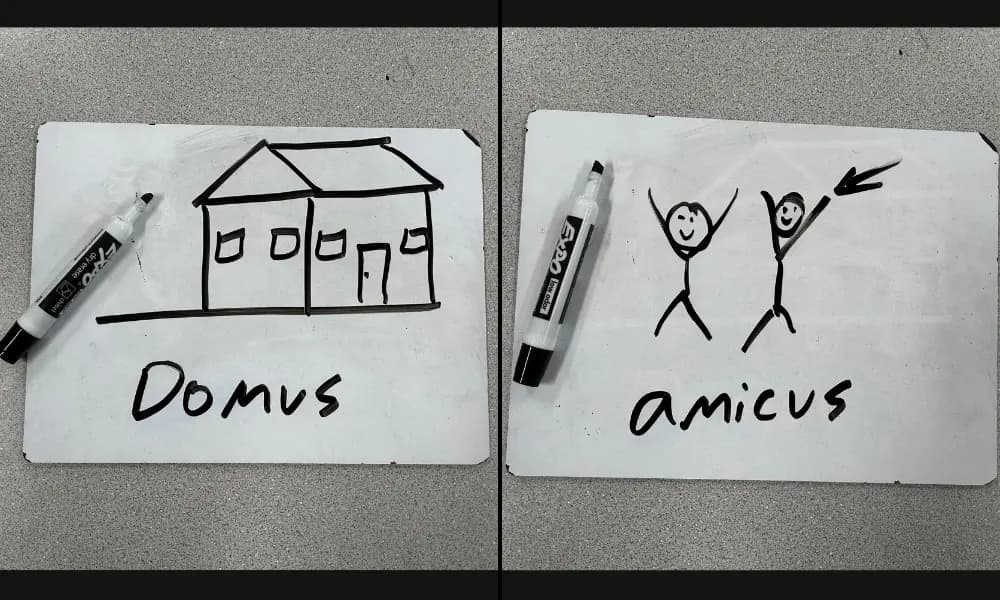
Divide students into teams of about 4 students or so. Have each team write all the vocab words to review on pieces of paper or sticky notes. Students then shuffle the words and then pick a person from their group to go first as the hint-giver with everyone else being the guessers for that round. Once all the teams are ready, start a 2 minute timer and announce "Go!". The person giving hints in each team has to describe the vocab terms without using any of the words in the answer. For example, if the word is "domus", they have to offer hints without ever saying the word "house", so "it's a place where people live, but not an apartment.". Students keep drawing cards, hinting and guessing until the timer runs out. The team with the most correct guesses in 2 minutes wins that round. Every round switch out guessers and hinters.
6. Who Am I? / Heads Up / Sticky Note Game
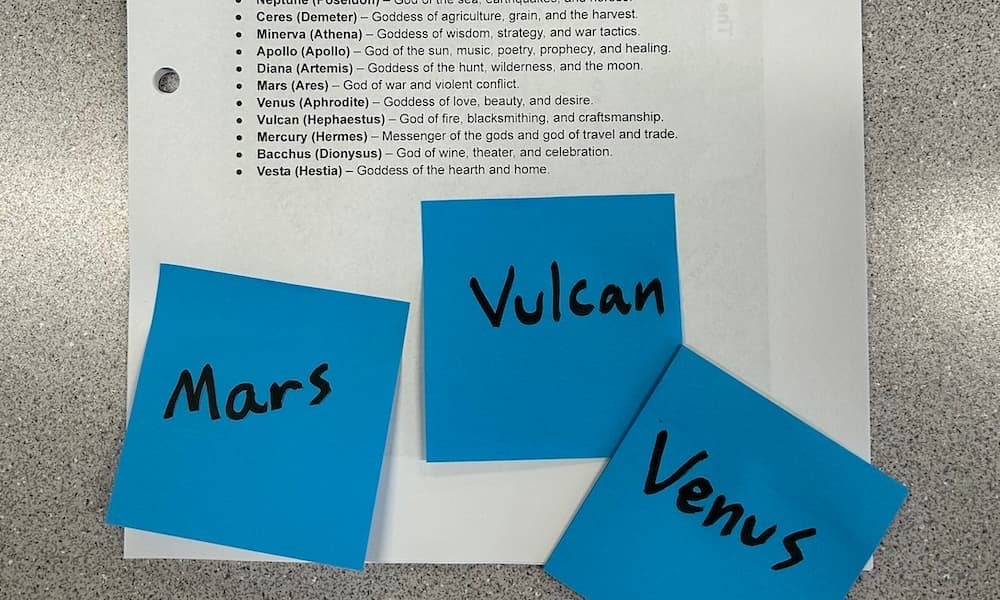
This game goes by a lot of names, but is very simple. Divide the students into groups of about 4 or so. Pass out stacks of sticky notes to each group. Have students write the vocabulary on the sticky notes one vocab item per note, shuffle their sticky notes, and then deal one out to everyone in the group without looking it. Without looking at the words, each student then puts their sticky note on their forehead. Everyone can see everyone else's words on their foreheads, but cannot see the word on his or her own. Students then ask the other people in the group questions about their own word to try to narrow down what it is. (e.g. "Is my word an animal?", "Am I an historical person", "Is my word larger than a microwave", etc) The first student to guess the vocab word on their own forehead wins, but play continues until everyone in the group can guess their word. This one is also another great one for learning the names of the Greek and Roman deities.
7. Charades
Just like Pictionary, but without drawing! One student gets a Latin word and acts out the meaning using only gestures: no talking, no sounds. Their team tries to guess the word in Latin. If they get it right, they earn a point. This is especially great for verbs and action words, and it brings lots of laughs!
8. Relay Race
Split the class into two or more teams. Have a list of Latin words ready. One student from each team runs to the board and writes the English meaning or Latin translation of a word you say out loud. Then they run back and the next teammate goes. First team to finish all their words correctly wins! This game adds movement and teamwork to vocab review.
9. Jeopardy
Create a game board with categories like "Nouns," "Chapter 1 Vocab," "Roman Numerals," and so on. Each category has questions worth different points (e.g., 100, 200, 300...). Students take turns picking a category and point value. You ask the question, and they must answer in the form of a question (just like the game show). For example, if the answer is studeo, the student says, "What is 'I study'?" This one was always a class favorite.
10. Ball Toss
Stand in a circle or at desks. Toss a soft ball to a student while saying a Latin word. The student must say the meaning, then toss the ball to another classmate while calling out a new word. If someone gets stuck, they can “pass” once. Keep playing until everyone’s had a turn or time runs out. Great for keeping all students alert and engaged!
11. Vocabulary Basketball
You will want a mini hoop and a soft ball, but a trashcan and a wad of paper will do in a pinch. Ask a Latin vocab question. If the student answers correctly, they get one chance to shoot the ball into the hoop. If they make it, they earn a bonus point. You can play in teams or as a whole class. This adds a fun reward for correct answers and keeps things exciting! The randomness of throwing the ball levels the playing field if you have some students who have mastered the vocab already and some who are still struggling.
12. Flyswatter
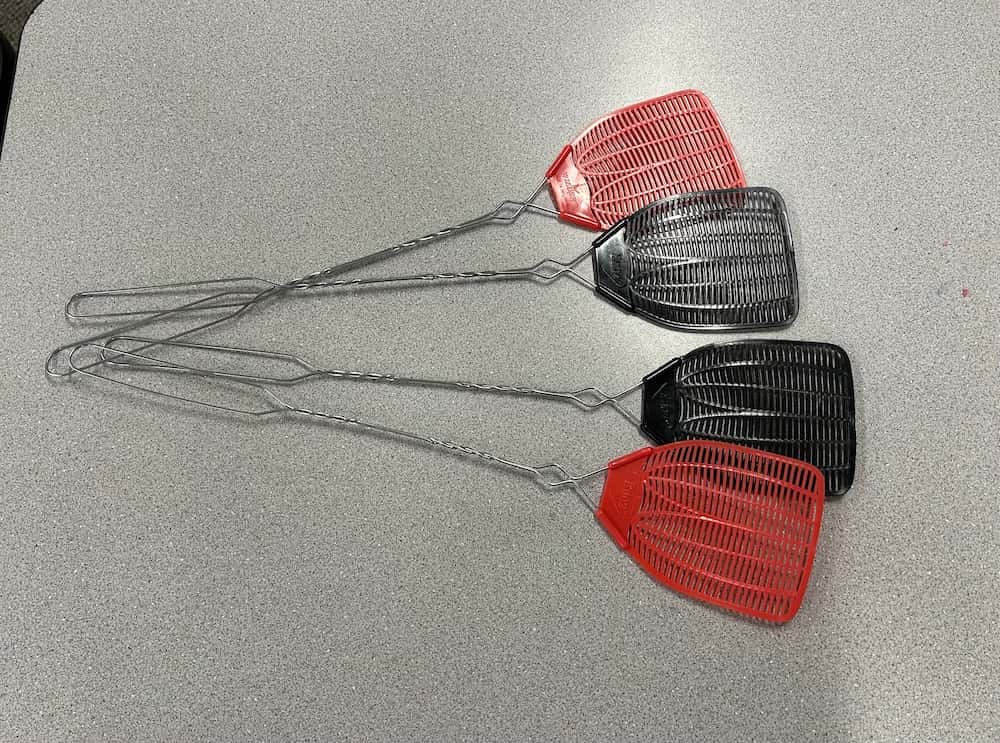
My German professor first introduced me to this one. Write English meanings on the board (or Latin words), spaced out all over. Divide class into two teams and then one student from each team comes to the board with flyswatters, standing on either side. You call out a Latin word (or English meaning), and they race to swat the correct answer. First one to swat the right word wins that round. Rotate players so everyone gets a turn. This is fast, fun, and competitive! You can also try pool noodles if you are worried about scratching the whiteboard, but the nice thing about fly-swatters is that they stack and you can see easier who swatted the word first.
13. Hangman
Choose a Latin word and draw blank spaces for each letter. Students guess letters one at a time. If they guess right, fill in the letter. If they guess wrong, draw a part of the stick figure (head, body, arms, legs, etc.). The goal is to guess the word before the stick figure is complete. This game helps students remember how to spell Latin words and think about their meanings. It is also great for illustrating common letter groupings in Latin grammar ("Hey class, notice how video and other 2nd Conjugation verbs all end in eo").
14. Sorting Race
Prepare sets of cards with Latin words and separate cards with their English meanings. Split students into teams. Give each team a full set. They race to match each Latin word to the correct meaning. First team to finish wins, but check the matches before announcing the winner! This game is great for reviewing large vocab lists. If you want to make things interesting, you can also use an entire sheet of paper for each word. The chaos of having to coordinate with letter-size sheets of paper makes it extra entertaining. This kind of sorting game is also phenomenal at helping students learn noun and verb endings.
15. Vocabulary Match / Find Your Partner
Vocabulary Match AKA Find Your Partner is a fast-paced vocabulary review game where each student receives a random card with either a Latin term or its English meaning (e.g. one student gets a card with "Rex" on it, the other gets "King"). At the signal, students stand up and move around the room, asking classmates about their cards until they locate the correct matching pair. Once partners find each other, they sit or stand together to show they are finished. The game continues until all pairs have been matched.
16. Bingo
Make Bingo boards filled with Latin words or meanings. Call out either the Latin word or the English meaning. Students mark the matching word on their boards. First student to get five in a row (across, down, or diagonal) shouts “Bingo!” and wins. You can also play for full board blackout. This is a quiet but effective review game.
17. Falsus/Mendax
Studying Latin numbers? I highly recommend Mendax (AKA Falsus)! If you are familiar with the bluffing card game BS (or Cheat), it is the same thing except in Latin and with a school-appropriate name. Divide students up into groups of 3-10 with a deck of normal playing cards for each group.
The goal of the game is to get rid of all the cards in your hand. Players discard them face-down one at a time while declaring a rank in ascending order (A, 2, 3, … K, then back to A). On a player's turn, they may play one or more cards and either tell the truth or lie about their rank. Any other player may immediately challenge by calling "Mendax!" (or "Falsus," etc.), after which the played cards are revealed: if the accuser is correct, the liar takes the entire pile; if not, the accuser takes the pile. Play continues clockwise, and once a new turn begins, previous plays can no longer be challenged. The first player to discard all their cards wins.
It is PHENOMENAL for practicing numbers because players have to announce what they are laying down (e.g. "quattuor septem") and other players need to listen carefully to catch the Latin numbers being said. Just remember to walk around from time to time to make sure students do not slip back into using English. I have had years where one class of playing this game and the students have their numbers 1-10 memorized while having a blast.
18. Four Corners
Label each corner of the room A, B, C, and D. Ask a multiple-choice Latin vocab question and read out the four possible answers. Students go to the corner that matches their answer. After everyone chooses, reveal the correct answer. Students in the correct corner stay in; the others sit out or try again next round. Great for kinesthetic learners and vocabulary recall!
Tips: Buzzing in
Most of these review games are going to involve some form of "buzzing in" to decide who gets to answer first. There are a lot of methods out there and they will largely depend on the game, the teacher's preference, the number of students, and how much noise you are comfortable with in the class.
Here are some options that you can experiment with:
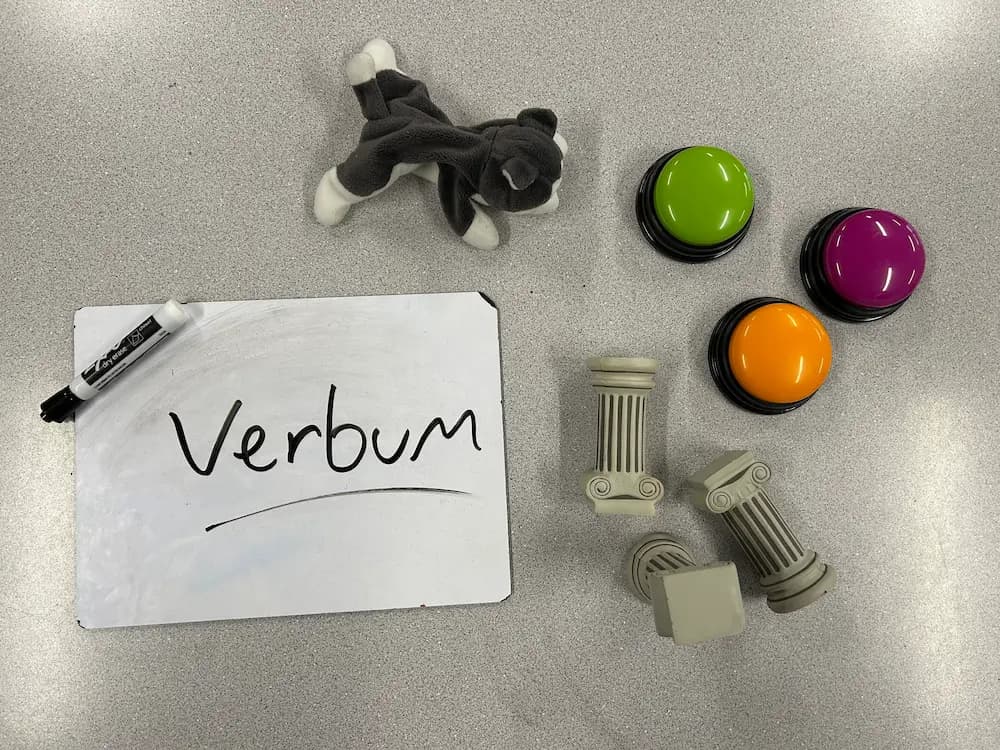
- Buzzers/Bells: little AA battery powered buzzers are pretty affordable actually. You can also find them in packs of four and they come in all shapes, sizes, colors, and sound effects. The benefits of buzzers is that it limits the number of people who can answer at a time and makes it quieter aside from the sound of the buzzer.
I have also seen the hotel front desk bells used for this also. - Shout it out: On the other end of the noise spectrum is just having the students shout the answer out. If you like more energetic, noisy, active classes, this is a good way to go. Caveat: the classes can get REALLY loud this way depending on the personality of the students.
- Raise hand: Raising hands is totally valid as well, but it can be tricky to see who raised hands first especially if the questions are easy. A variation I saw recently at a Jeopardy game at the 2025 Fall Forum at ASU involves slapping the desk and then raising hands. The slap-desk-then-raise-hand trick makes it audible as well as visible.
- Mini-whiteboards / slates: I prefer (somewhat) quieter classrooms, so this might be my favorite. Students answer by writing the answer on their mini-whiteboards and then showing the answer. It is quiet and quick to read who got it wrong/right. One downside is that students learn quickly that they can get the point by writing far less legibly, so a rule where the answer has to be correct AND legible is helpful here. You can give all players on all teams the whiteboard (100% engagement but it is hard to see who was first) or each team shares one whiteboard (less engagement, but easier to see who was first.).
- Stand: First to stand gets to answer first. Not ideal for all classes and students, but if you have a bunch of students who thrive with lots of movement, this is a fun one.
- Grab the column: Another Latin teacher at the school where I teach introduced me to this one. A foam column (or ball or stuffed animal, etc) is placed in between the two teams. When the question is shown, the first student to grab the object gets to answer. If they get it wrong, the other team tries. This is great for adding more movement into a class and it is very clear who got it first (unlike with raised hands). Definitely use something that is soft so it does not damage anything if it accidentally gets knocked across the room.
Other Tips and Tricks
- Come up with your own games:Creating your own games using what you have on hand can be very effective! A retired teacher I spoke to recently said he would play a game he made up called "Worldof Fortune" where he would take the classroom globe, write point values on sticky notes around the equator, and then spin it to see how many points each question would be worth. Kids love games that feel like they are theirs!
- Rewards: review game rewards are great for upping the ante, creating excitement, and getting buy-in from the less easily interested students. Napoleon Bonaparte once said that a soldier will fight long and hard for a bit of colored ribbon, and I think the same is true for 8th graders and chocolate.
- Candy is a great cheap option, especially if you stock up on it AFTER the holidays when they are heavily discounted (students really don't mind eating halloween-themed candy in December).
- Stickers are a great option, if you want something that lasts a bit longer. I have an article on how to print your own from home: How to Print Latin Stickers. My students still compete to see who can get the most "Latin Review Game Winner" stickers.
- Paper crowns and fake laurel wreaths are fun as long as the school dress code permits.
- Bonus 1-day privileges like free-seating or getting to pick a fun, educational YouTube video from a pre-vetted list of options is also great.
- Finally, the name on the whiteboard for bragging rights is a HUGE motivator. Seeing "Current Around the World Champion: Timmy" on a corner of one of the classroom whiteboards makes everyone want to be the next review game champion.
- It is a good idea to circulate the class to make sure they do not switch into using English when they should be practicing Latin, especially for games like Pictionary and Mendax.
- Sometimes two students will both guess the right answer at the exact same time. If you want additional review you can have them do a follow-up question to see who should get the point. That said, I prefer to have them play rock-paper-scissors (best two out of three) to see who gets the point. Rock-paper-scissors adds a little bit of randomness to an otherwise skill-based review game.
- Feel free to share this with other language teachers. While I wrote this with Latin teachers in mind, the games can apply whether you teach Spanish, French, Chinese, or any language.
Final Thoughts
I firmly believe that Latin can always be "the fun class" no matter what other subjects are taught at your school.
Review games bring a lot of joy and excitement, help create the class culture, and above all help the students remember what they need to remember. Games are great for learning new vocabulary, getting students ready for a quiz or test, as a rainy day activity, or just as a way to reward the students for putting in a lot of effort in a long school week.
For a 7th grader stuck sitting in uncomfortable school desks every weekday from 8am to 4pm, there is a world of difference between answering 50 review questions on a yet another worksheet and playing an epic review game with friends (where coincidentally they also get to answer 50 review questions).
I hope these review game suggestions can help brighten you and your students' week and help in making Latin "the fun class" at your school.
Thanks for reading!
Ideas or Suggestions?
Have tips for these games or ideas for other games not listed? Let me know!
Click to Email Us
Patrick Mooney
Patrick received his bachelors degree in History and Classics (with an emphasis in Latin) from the University of Mississippi. Afterwards he earned a Masters degree in History from the University of Tennessee where he studied Medieval Latin manuscripts and paleography. Patrick taught 6th - 12th grade Latin for five years at a public charter school in Arizona. In 2022, he switched to a career in web development where he worked primarily on tourism websites across the US. Patrick now splits his time between teaching 7th grade Latin, running a freelance web-development business, and building Arcade Schoolhouse.
